
Masterclass Workbook Series
Just Ask Max
JUST ASK MAX™
MASTERCLASS
WORKBOOK SERIES™
Learn Something Useful. Build Something Better.
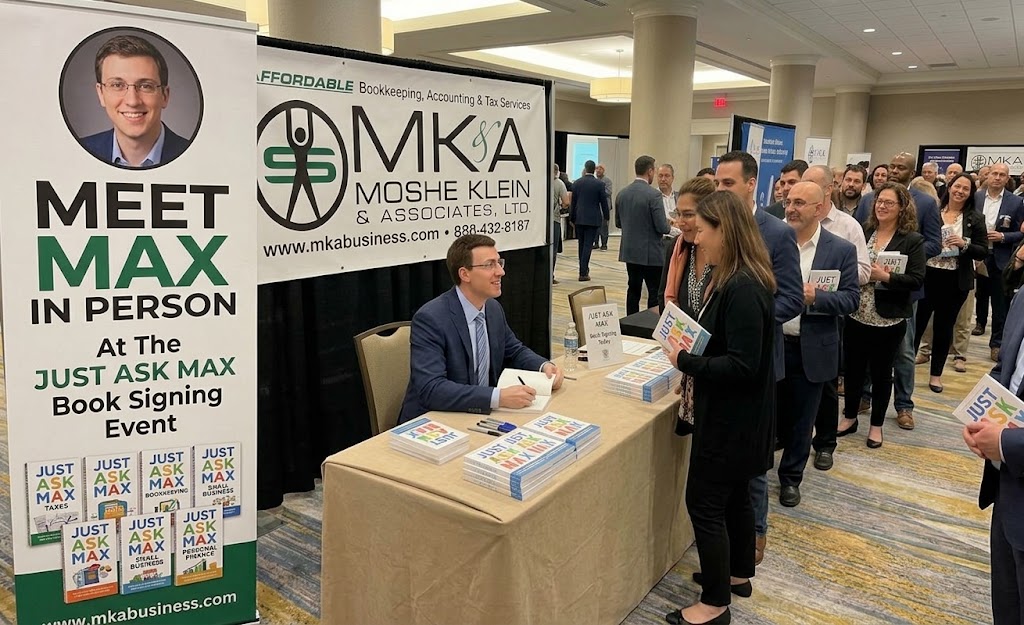
Whether you’re thinking about starting a business, growing one you already own, understanding taxes, improving your bookkeeping, or simply making more confident financial decisions, you’re in the right place. The JUST ASK MAX™ MASTERCLASS WORKBOOK SERIES™ was created to make important business and financial topics easy to understand, practical to apply, and worthwhile to read.
Each workbook is designed to help you gain knowledge, discover opportunities, avoid common pitfalls, and take meaningful steps toward your goals. No complicated jargon. No overwhelming textbooks. Just practical guidance, real-world insights, and useful information that can help you move forward with confidence.
Volume 1
SMALL BUSINESS SUCCESS
A Practical Guide for Current and Future Business Owners
- Thinking about starting a business?
- Already own a business and want to build a stronger foundation?
- This workbook will help you better understand business ownership, bookkeeping, taxes, marketing, cash flow, customer relationships, growth strategies, and more.
- Each chapter is designed to be informative, encouraging, and easy to apply to your real-life situation.
PART 1: Exploring Business Ownership
Chapter 1: Is Business Ownership Right for You?
Why This Chapter Matters
Let’s start with a simple question. Why are you reading this workbook?
Maybe you’ve been thinking about starting a business for years. Maybe you’ve recently come up with an idea you can’t stop thinking about. Maybe you already have a business and want to take it to the next level. Or maybe you’re simply curious to see whether business ownership could be a good fit for you.
Wherever you are today, you’re in the right place. One of the biggest misconceptions about entrepreneurship is that successful business owners somehow have everything figured out from the beginning. The truth? Most don’t.
Most successful business owners started with uncertainty, questions, and a desire to build something better. This chapter isn’t designed to tell you whether you should start a business.
It’s designed to help you think about what you want, what motivates you, and whether business ownership aligns with the life you’re trying to create. And don’t worry. This isn’t a test.
There are no wrong answers. Let’s simply have a conversation.
What You'll Learn
 Why people become business owners
What business ownership is really like
Traits that often contribute to success
Whether entrepreneurship may be a good fit for you
How ready you are to take the next step
Let's Start With An Honest Conversation
Many people say they want to own a business. What they often mean is that they want:
- More freedom
- More flexibility
- More income
- More control over their future
- More purpose in their work
Those are all wonderful reasons. But owning a business isn’t really about owning a business. It’s about solving problems. Helping people. Making decisions. Learning new things. Adapting when circumstances change.
The good news is that you don’t need to be perfect at any of those things to get started. You simply need to be willing to learn. In fact, one of the most important characteristics I see in successful business owners isn’t intelligence, experience, or even confidence.
It’s curiosity. The willingness to ask questions. The willingness to learn. The willingness to keep moving forward. If you’re reading this workbook, you already possess that quality.
That’s a great place to start.
Max's Real-World Insight
I’ve seen people launch successful businesses with very little money. I’ve seen people launch successful businesses with very little experience. I’ve even seen people start businesses they never expected to succeed. What those people shared wasn’t a perfect plan.
They shared a willingness to begin. Success rarely starts with certainty.
It usually starts with a decision.
Business Owner Readiness Assessment ™
Let’s see where you are today. Rate each statement from 1 to 5.
1 = Not at all true
5 = Very true
I enjoy learning new things. Score: _____
I am willing to solve problems as they arise. Score: _____
I take responsibility for my decisions. Score: _____
I can remain patient while working toward long-term goals. Score: _____
I enjoy helping other people. Score: _____
I am comfortable asking questions when I need help. Score: _____
I am open to trying new ideas. Score: _____
I am willing to continue learning and improving. Score: _____
Total Score: _____
Understanding Your Results
8–20
You may still be exploring whether business ownership is right for you. That’s okay. One purpose of this workbook is to help you learn more and gain confidence.
21–30
You already possess several qualities that can support business ownership. The more you learn, the more prepared you’ll become.
31–40
You demonstrate many of the traits commonly found in successful business owners. You may be closer to taking the next step than you realize.
Let's Apply What We Learned
Your Business Why
Complete this sentence: I am interested in business ownership because…
Imagine This
Three years from today, your business is successful.
What does success look like to you?
What excites you most?
☐ Helping people
☐ Independence
☐ Flexibility
☐ Solving problems
☐ Financial growth
☐ Building something meaningful
☐ Creating opportunities for others
☐ Other: __________________
Max's Sample Response
I am interested in business ownership because I enjoy helping people while creating a future that reflects my values and goals.
Success means having a business that serves my customers well, supports my family, and gives me flexibility to enjoy life.
Remember, your answers don’t need to match mine. The important thing is that they’re honest
Confidence Check
Before moving on, let’s make sure this chapter accomplished its goal.
What surprised you most about business ownership?
What motivates you to explore entrepreneurship?
What are two strengths that could help you succeed?
What is one skill you would like to develop?
Key Takeaways
- You do not need all the answers before getting started.
- Successful business owners come from many different backgrounds.
- Curiosity is one of the most valuable business skills.
- Challenges are opportunities to learn and improve.
- Progress matters more than perfection.
- Every successful business starts with a first step.
Your Action Items
- Write down three reasons you want to own a business.
- Talk with one business owner you respect.
- Ask them what they wish they knew before they started.
- Identify three strengths you already possess.
- Complete Chapter 2.
Max's Final Thought For You
Here’s something I hope you’ll remember. You don’t need a perfect plan. You don’t need unlimited resources. You don’t need years of experience. You don’t need all the answers.
What you need is a willingness to learn, grow, and keep moving forward. Every successful business owner was once exactly where you are now. Asking questions. Exploring possibilities. Trying to determine what comes next.
If this chapter helped you think a little more clearly about your future, then you’ve already made progress. And progress is exactly how successful businesses begin.
I’m rooting for you.
— Max™
Volume 1: Small Business Success
Chapter 2
From Idea to Opportunity
“A business idea has value, but a business opportunity has potential. The difference is often found in the problem you solve and the people you serve.” – Max
Chapter Introduction
After exploring business ownership in Chapter 1, the next step is evaluating your business idea. Many people dream about starting a business, but not every idea becomes a successful opportunity.
The good news is that you do not need a revolutionary invention or a million-dollar concept to build a successful small business. Many thriving businesses simply solve common problems, provide exceptional service, fill unmet needs, or offer customers a better experience than existing alternatives.
Before investing significant time, money, and energy into a new venture, it is important to take an honest look at your idea and determine whether it has the potential to become a sustainable business.
This chapter will help you move beyond excitement and begin evaluating your idea from a practical business perspective.
What You Will Learn
By the end of this chapter, you should be able to:
- Clearly describe your business idea.
- Identify the problem your business solves.
- Determine who may benefit from your products or services.
- Recognize the difference between an idea and an opportunity.
- Begin evaluating the viability of your concept.
Max’s Masterclass
A common misconception among aspiring entrepreneurs is that success begins with a product.
In reality, success often begins with a problem.
Think about some of the businesses you use regularly. Whether it’s a plumber, accountant, landscaper, restaurant, or online retailer, each exists because somebody needed a solution.
Customers are not buying products or services. They are often buying convenience, expertise, peace of mind, savings, efficiency, or solutions.
Ask yourself:
- What problem does my business solve?
- Why does this problem matter?
- How are people solving this problem today?
- Can I provide a better solution?
The strongest business opportunities generally share three characteristics:
1. They Solve a Real Problem
The greater the problem, the more valuable the solution may become.
2. People Are Willing to Pay for the Solution
An idea may sound exciting, but if customers are unwilling to spend money on it, building a sustainable business may be difficult.
3. The Business Can Be Repeated Consistently
A business needs more than a single sale. It needs a process that can reliably attract and serve customers over time.
As you evaluate your idea, try to view it through the eyes of a potential customer rather than the eyes of the business owner.
Max’s Insight
Many successful businesses began as simple solutions to everyday frustrations.
The goal is not necessarily to invent something entirely new.
The goal is to identify a need and serve people well.
Sometimes the best opportunity is hiding inside a problem you have personally experienced yourself.
Workbook Exercise
Define Your Business Idea
Describe your idea as clearly as possible.
What product or service will you offer?
What problem will it solve?
Who is most likely to purchase it?
Why would someone choose your business?
Reflection Questions
Take a few minutes to think carefully about the following questions.
- What inspired this business idea?
- Have you personally experienced the problem your business will solve?
- Who might benefit most from your solution?
- What concerns do you have about pursuing this opportunity?
- What excites you most about this idea?
Sample Responses
Business Idea: Mobile bookkeeping service.
Problem Solved: Small business owners struggle to maintain accurate financial records.
Target Market: Local small business owners and independent contractors.
Why Customers Would Choose It: Personalized service, convenient support, and specialized small-business expertise.
Remember, there are no perfect answers. The goal is simply to begin thinking like a business owner.
Chapter Action Plan
Before moving on to Chapter 3, complete the following:
☐ Write a one-sentence description of your business idea.
☐ Identify the primary problem your business solves.
☐ Identify three potential customer groups.
☐ Speak with at least one person who could become a future customer.
☐ Record any feedback or suggestions.
Key Takeaway
Successful businesses are built on opportunities, not just ideas. The more clearly you understand the problem you are solving and the people you are serving, the stronger your foundation for success becomes.
Just Ask Max™
Every successful business starts somewhere. Don’t worry about having all the answers today. Focus on learning, asking questions, and taking thoughtful steps forward. Progress is often built one decision at a time.
Volume 1: Small Business Success
Chapter 3
Understanding Your Ideal Customer
“When you try to serve everyone, you often connect with no one. When you understand your ideal customer, your business becomes stronger, more focused, and more valuable.” – Max
Chapter Introduction
One of the most important questions every business owner must answer is:
Who is my customer?
Many new entrepreneurs become so focused on their product, service, or business idea that they spend very little time thinking about the people they hope to serve. However, successful businesses are built around customers, not products.
The better you understand your customers, the easier it becomes to market your business, communicate your value, improve your services, and build long-term relationships.
In this chapter, you’ll begin identifying your ideal customer and gain a better understanding of what motivates people to choose one business over another.
What You Will Learn
By the end of this chapter, you should be able to:
- Identify your ideal customer.
- Understand customer needs and challenges.
- Recognize common buying motivations.
- Improve your marketing focus.
- Build stronger customer relationships.
- Better position your business for growth.
Max’s Masterclass
Imagine you’re opening a new restaurant.
Would you advertise the same way to:
- Young professionals?
- Families with children?
- College students?
- Retirees?
Probably not.
Each group has different needs, preferences, budgets, schedules, and expectations.
The same principle applies to every business.
Your ideal customer is the person or group most likely to benefit from your products or services.
Understanding your ideal customer helps you answer questions such as:
- What problems are they trying to solve?
- What challenges do they face?
- What are they looking for?
- Why would they choose my business?
- What concerns might prevent them from becoming a customer?
Businesses that understand their customers often spend less money on marketing while achieving better results.
The goal isn’t to exclude people. The goal is to focus your efforts on serving the people who are most likely to need and appreciate what you offer.
Max’s Insight
Many small business owners believe they need more customers.
Often, what they actually need are more of the right customers.
Customers who understand your value, appreciate your services, and become repeat clients can be far more valuable than a large number of customers who are not a good fit for your business.
Finding the right audience often makes growth easier and more sustainable.
Workbook Exercise
Create Your Ideal Customer Profile
Think about your future customer and answer the following questions.
Who is most likely to benefit from your product or service?
What age range best describes your ideal customer?
What challenges or problems do they face?
What goals are they trying to achieve?
How does your business help them?
Reflection Questions
Take a few moments to consider the following:
1. Have you personally spoken with potential customers?
2. What did you learn from those conversations?
3. What questions do customers ask most often?
4. What concerns might prevent someone from purchasing your product or service?
5. What would build trust with your customers?
Real-World Example
Let’s look at a simple example.
Business: Bookkeeping Service
Poor Customer Description:
“Anyone who needs bookkeeping.”
Better Customer Description:
“Small business owners with fewer than 20 employees who want accurate financial records but don’t have the time or expertise to manage bookkeeping themselves.”
Which description makes marketing easier?
The second one.
The more clearly you define your customer, the easier it becomes to communicate your value and attract qualified prospects.
Sample Responses
Ideal Customer:
Service-based small business owners.
Primary Challenge:
Limited time to manage financial records.
Business Goal:
Save time and improve financial organization.
How the Business Helps:
Provides accurate bookkeeping, financial reporting, and peace of mind.
These examples are intended to guide your thinking. Your answers should reflect your own business and goals.
Chapter Action Plan
Before moving on to Chapter 4, complete the following:
☐ Identify your ideal customer.
☐ List three common problems your customer experiences.
☐ List three benefits your business provides.
☐ Speak with at least one potential customer.
☐ Record feedback and observations.
☐ Update your customer profile as needed.
Key Takeaway
Businesses succeed by solving problems for people.
The more clearly you understand who your customers are, what they need, and why they make purchasing decisions, the better equipped you’ll be to build meaningful relationships and a successful business.
Understanding your customer is not a one-time exercise. It is an ongoing process that can help guide nearly every decision you make as a business owner.
Just Ask Max™
Every successful business begins with understanding people. Products and services matter, but customers are the reason businesses exist. Invest time in learning about the people you serve, and you’ll build a stronger foundation for long-term success.
Looking Ahead
Chapter 4: Evaluating Your Competition
In the next chapter, we’ll explore how to research your competition, identify opportunities, learn from other businesses, and position your company for success without feeling intimidated by competitors.
JUST ASK MAX™ MASTERCLASS WORKBOOK SERIES™
Volume 1: Small Business Success
Copyright © 2026 Moshe Klein & Associates, Ltd.
All Rights Reserved.
No portion of this publication may be copied, reproduced, distributed, transmitted, displayed, stored in a retrieval system, published, modified, or used in any form or by any means, whether electronic, mechanical, photocopying, recording, scanning, or otherwise, except for personal, non-commercial use, without the express prior written consent of Moshe Klein & Associates, Ltd.
This publication is protected by applicable copyright, trademark, and intellectual property laws.
JUST ASK MAX™, THE MAX MINUTE™, MASTERCLASS WORKBOOK SERIES™, and related branding elements are proprietary property of Moshe Klein & Associates, Ltd.
Unauthorized use, reproduction, or distribution of any portion of this publication may violate copyright and trademark laws.
Important Disclaimer
This workbook is provided for educational and informational purposes only.
The information contained in this workbook should not be construed as legal, tax, accounting, investment, financial, insurance, employment, or other professional advice.
Readers should consult with appropriately licensed professionals regarding their specific circumstances before making financial, tax, business, investment, legal, or other important decisions.
While every effort has been made to provide accurate and useful information, Moshe Klein & Associates, Ltd. makes no representations or warranties regarding the completeness, accuracy, or applicability of any information contained herein.
Use of this workbook constitutes acceptance of these terms.
Artificial Intelligence Disclosure
Max™ is an educational artificial intelligence assistant created by Moshe Klein & Associates, Ltd.
Max™ is designed to provide general educational information and practical guidance but does not replace professional judgment, individualized advice, or consultation with qualified professionals.
Artificial intelligence systems may occasionally produce incomplete, outdated, inaccurate, or unintended information. Users should independently verify important information and seek professional guidance when appropriate.
Readers are encouraged to use Max™ as a learning resource and educational tool rather than as a substitute for professional advice.